
On this page
Social listening starts with a simple question: What are people already discussing that matters to our business? The hard part is turning that question into a repeatable search that finds useful conversations rather than an endless stream of unrelated posts.
An AI-assisted campaign helps narrow that work. You decide what topics matter, which platforms to cover and which conversations deserve attention. AI can help find and organize results, but it does not make the decision to enter a conversation for you.
This guide walks through a first campaign using ScaleBuzz as a practical example. It is designed for a startup, small business or agency testing focused social listening for the first time.
Start with one clear objective
Before creating anything, finish this sentence: “We want to understand what people are asking about ___.”
For a fictional software company offering employee onboarding tools, an objective could be: “Understand how small teams compare onboarding processes and where they run into problems.” That is more useful than “monitor everything about HR technology.”
Choose a single audience and a narrow question. You might focus on people evaluating alternatives, trying to solve a recurring workflow problem or discussing a topic that could inspire better educational content. These are different goals; separating them makes the results easier to assess.
A first campaign does not need an elaborate strategy document. Write down the topic, intended audience and what a useful result would look like. You can refine all three after seeing actual conversations. If you are unsure whether you need quick mention tracking or broader market insight, first read Social Media Monitoring vs Social Listening.
Step 1: Create a campaign around a topic
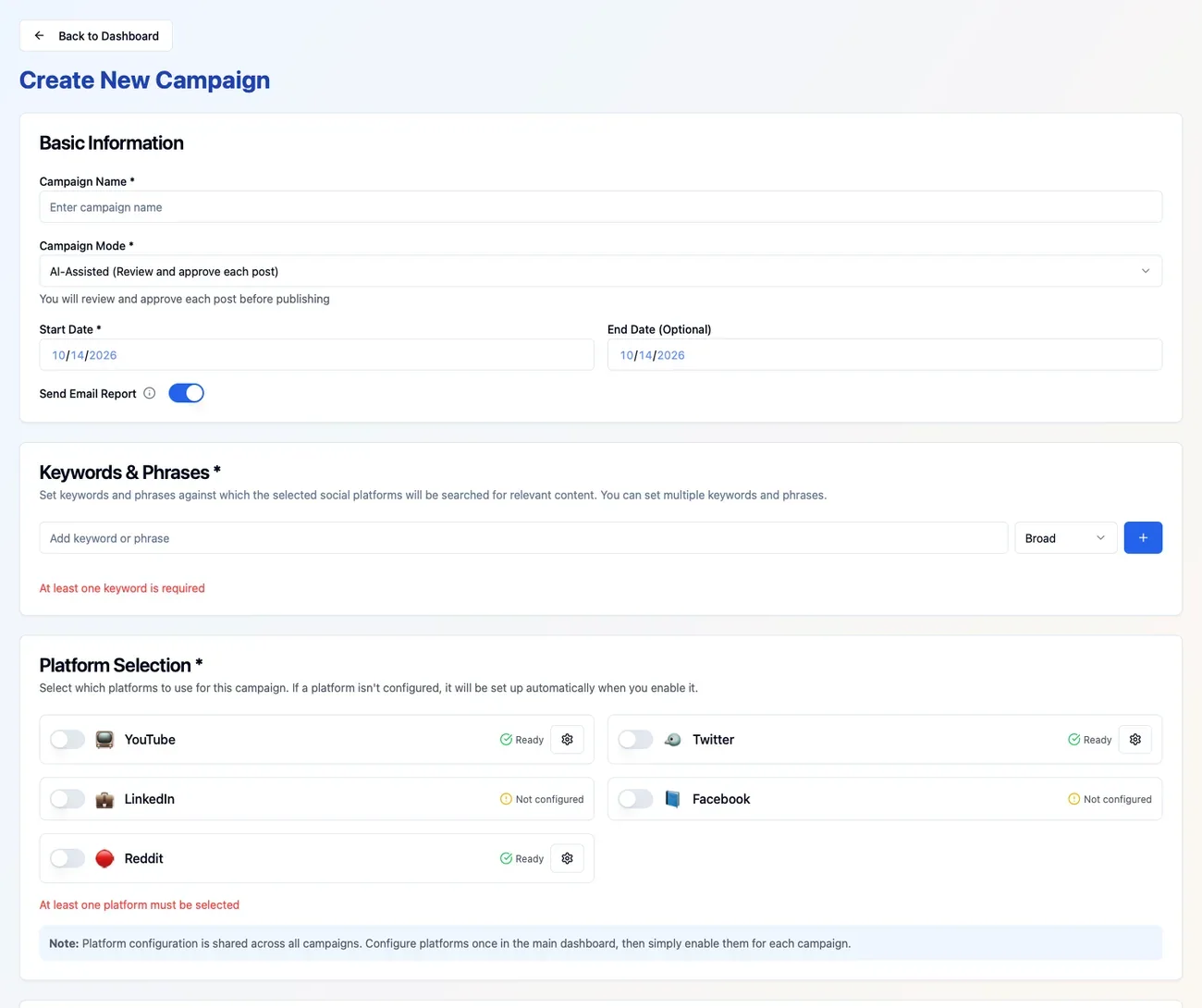
In ScaleBuzz, begin with New Campaign. Give the campaign a name that describes its purpose, not just the product or company. “Small-team onboarding questions” is more informative than “Campaign 1.”
A campaign is a workspace for the keywords and topics you want to follow. Keeping campaigns focused also makes it easier to compare the conversations found for different products, customer groups or clients.
Example setup (illustrative, not customer data):
- Campaign: Small-team onboarding questions
- Audience: Founders and operations leads at growing companies
- Objective: Find practical questions about onboarding work
- Follow-up: Review results and use repeated questions to improve educational content
Step 2: Choose keywords and topics people actually use
Start with the language of the problem. People rarely describe their situation using the exact keywords in a vendor’s product brochure.
For the onboarding example, useful starting topics might include “new hire checklist,” “onboarding process for small teams,” “onboarding spreadsheet” and “employee onboarding tools.” Some reflect a problem; some indicate a comparison; others describe an approach the user already knows.
Avoid feeding every possible synonym into the same campaign. A short, deliberate set is easier to evaluate. After the first run, ask which terms found genuinely relevant conversations and which introduced noise.
Also keep in mind that a matching keyword is not proof of purchase intent. Someone writing a tutorial, sharing a joke or discussing a past experience may not be looking for a product at all.
Step 3: Pick the platforms that suit the question
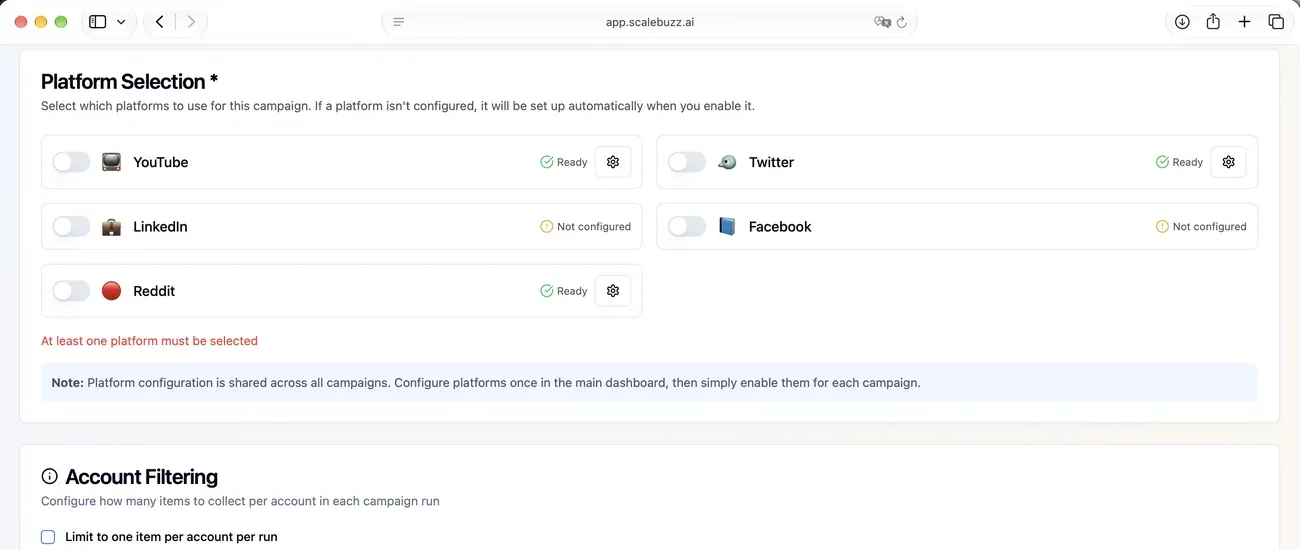
ScaleBuzz discovers public conversations on X, Reddit and YouTube. You do not need to search every platform simply because you can.
On Reddit, look for communities where people ask for advice and compare approaches. Read each community’s rules before participating. On X, context often depends on the surrounding discussion, so inspect the full exchange before forming an opinion. On YouTube, discussions may appear under reviews, explanations or tutorials; the video’s topic and the creator’s context matter as much as the individual comment.
For a first test, choose the platform or platforms where your audience discusses this problem. Your aim is to learn which sources produce useful, reviewable conversations — not to maximize the number of results.
Step 4: Set practical boundaries
The campaign can include optional language settings and a daily spending budget. Use these controls to make the test predictable.
If your audience communicates primarily in English, start there. If you operate across several markets, consider separate language-focused campaigns so differences in wording and context are easier to understand. Avoid assuming that language settings are the same thing as geographic targeting.
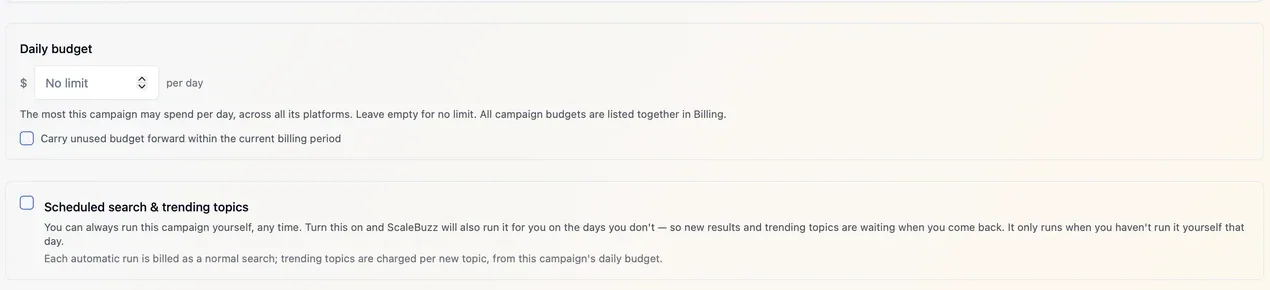
For budget, start with an amount appropriate for an experiment. ScaleBuzz follows a pay-per-use model, and the price is shown in the application before a search runs. Review the current Pricing page rather than relying on old pricing examples or assumptions.
A spending limit does not replace a relevance check. Low-cost but irrelevant results are still a distraction.
Step 5: Run the campaign and inspect the original conversations
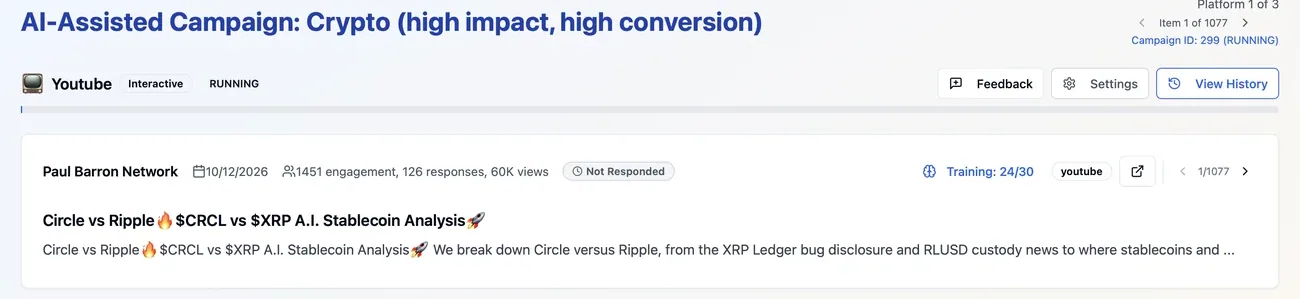
After a run, review the conversations that ScaleBuzz found. This is where campaign setup becomes actual research.
For each promising result, open the original discussion and look for context:
- What is the person trying to accomplish? A general complaint is different from a direct request for advice.
- Is the discussion current and active? Old material can be valuable research without being a good place to reply today.
- Does your business have first-hand knowledge to contribute? An accurate example or a limitation is often more useful than a generic recommendation.
- Would participation be welcome? Community rules and the tone of the conversation matter.
One thoughtful conversation may be more valuable to your learning than dozens of loosely matching posts. This is a qualitative judgment, not a promise of commercial results.
Step 6: Decide whether to reply, research or skip
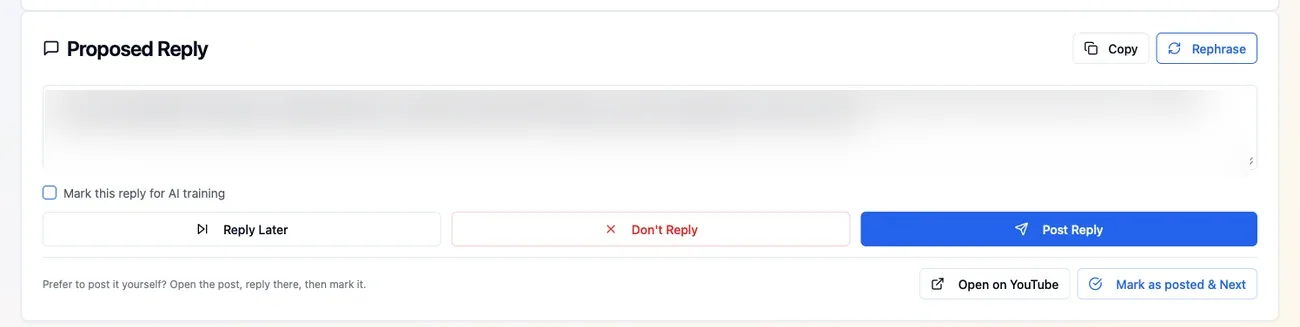
Not every relevant conversation needs a reply. In practice, the three most useful choices are:
- Reply: You can answer the question accurately, transparently and without forcing a sales pitch.
- Research: The post reveals a recurring pain point that deserves an FAQ, guide or product investigation.
- Skip: The topic is outside your expertise, the context is sensitive or the community does not welcome participation.
ScaleBuzz can prepare a suggested reply in your brand’s voice. A person reviews and approves each reply to someone else’s post before publication. Approved replies can be published through supported Reddit and YouTube integrations; for X conversations, you post the prepared reply yourself. Product capabilities vary by platform, so the final action is not identical everywhere.
If you are affiliated with a product that you recommend, be transparent about that connection when it matters. Never pretend to be an independent customer.
Step 7: Learn from the first run before scheduling more
A campaign becomes more useful through small improvements, not by adding more and more keywords.
After your first run, keep a simple review sheet: which topics led to genuinely relevant questions, which platforms supplied useful context, which results you skipped and which questions appeared more than once. Then narrow or expand the campaign deliberately.
ScaleBuzz also supports scheduled discovery. You can choose to keep finding new conversations without manually starting every search, subject to the campaign settings and current usage pricing. But only schedule a campaign once its results are worth reviewing. Automation should preserve a useful workflow, not multiply irrelevant matches.
Turn repeated questions into original content
A powerful outcome of listening is not always a reply. Suppose several people ask whether an onboarding spreadsheet is enough for a 15-person team. You could create an original guide comparing the limits and benefits of a spreadsheet, a checklist and dedicated software.
That article would address a real question with a fuller explanation than a short comment can provide. It should include genuine expertise, trade-offs and examples — not simply restate posts you found. If you cite individual conversations, consider privacy, consent and context, especially when dealing with small communities.
A first-campaign checklist
Before the first run, confirm that you have:
- A specific question and audience
- A small set of relevant keywords and topics
- One or more appropriate platforms
- Language and budget settings that match your needs
- A process for checking original conversations
- A rule that human judgment comes before any reply
- A plan to refine the campaign based on what you learn
The takeaway: a useful social listening campaign is a focused research habit, not a volume contest. Set it up to find conversations you can understand, then choose deliberately whether to participate, learn or create content. For a practical method to evaluate the quality of what you find, see Social Listening Metrics That Matter.
To see the workflow in the product, visit How ScaleBuzz Works or start a free campaign.
Further reading